

Introducción: El Atractivo Atemporal de Haji Ali Dargah
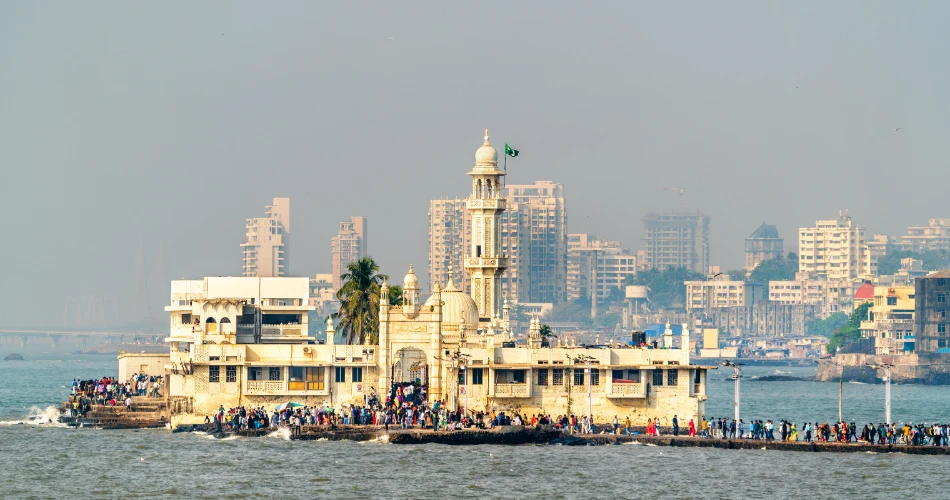
Situado contra el telón de fondo del Mar Arábigo, Haji Ali Dargah se erige como uno de los monumentos más icónicos de Mumbai. La mezquita y la tumba encaladas, que parecen flotar sobre las aguas, atraen no solo a devotos, sino también a viajeros, fotógrafos y entusiastas de la cultura. Construido en el siglo XV, el santuario está dedicado al rico comerciante convertido en santo Sayyed Peer Haji Ali Shah Bukhari. Más allá de su significado religioso, el lugar encarna el espíritu de Mumbai: una mezcla de devoción, inclusividad y belleza impresionante.
Paseando por el estrecho camino que conecta el santuario con la tierra firme, sentirás la brisa del mar, escucharás canciones devocionales y serás testigo de personas de todas las fes reuniéndose en armonía. Esto convierte a Haji Ali Dargah en más que un sitio religioso: es una experiencia cultural que permanece contigo para siempre.

Historia de Haji Ali Dargah
Los orígenes de Haji Ali Dargah se remontan al siglo XV, durante el reinado del Sultanato. El santuario está dedicado a Sayyed Peer Haji Ali Shah Bukhari, un rico comerciante de Bukhara (Uzbekistán) que renunció a sus riquezas para abrazar la espiritualidad. Viajó ampliamente y, después de realizar la peregrinación a La Meca (Hajj), se estableció en Mumbai, donde dedicó su vida a guiar a los pobres y necesitados.
La leyenda dice que Haji Ali falleció durante una peregrinación y su cuerpo fue dejado a la deriva en el mar. Milagrosamente, su ataúd flotó de regreso a las costas de Mumbai, justo en el lugar donde ahora se encuentra el santuario. Desde entonces, el sitio se ha convertido en un faro de fe, atrayendo a millones de devotos cada año.
Esta historia no solo destaca la importancia espiritual del santuario, sino que también lo vincula con el patrimonio de Mumbai. Es un monumento raro donde la leyenda, la fe y la historia se fusionan sin problemas.
Arquitectura y Diseño del Santuario
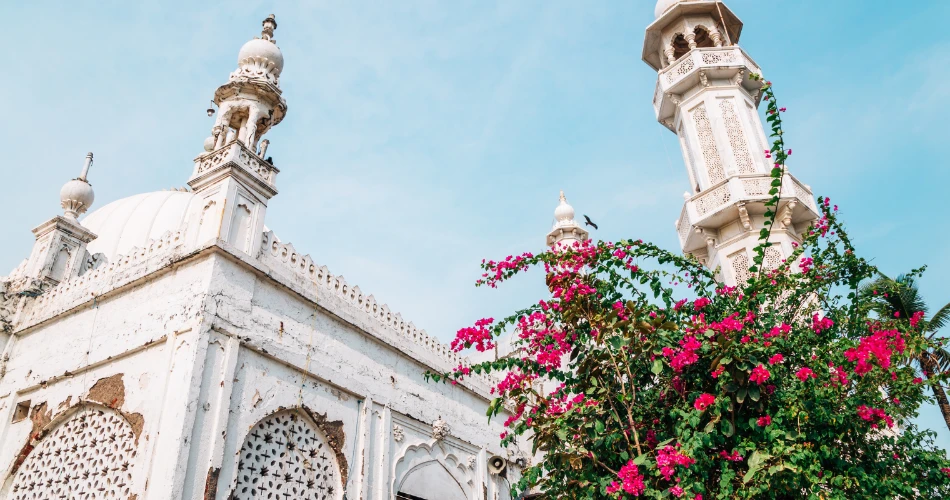
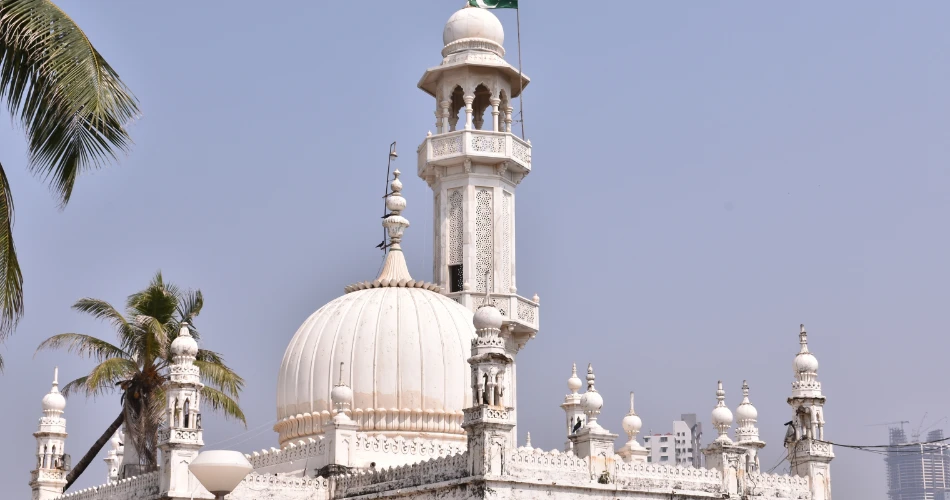
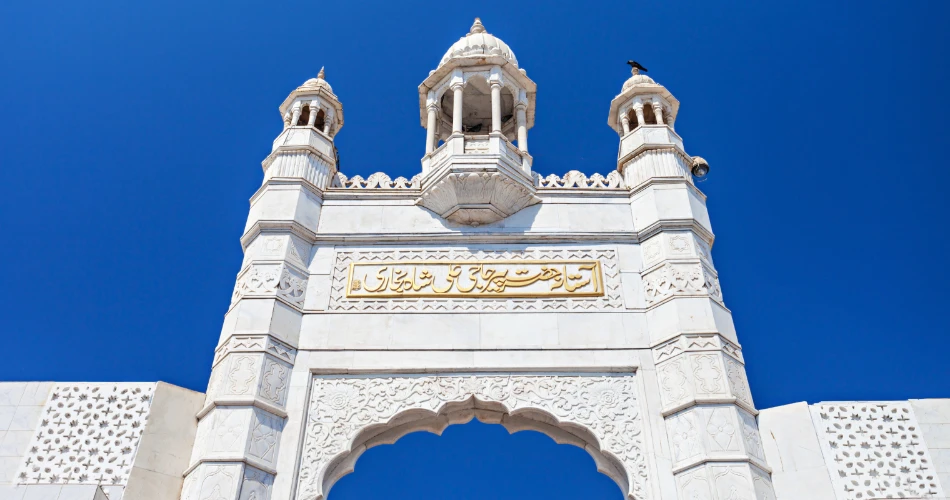
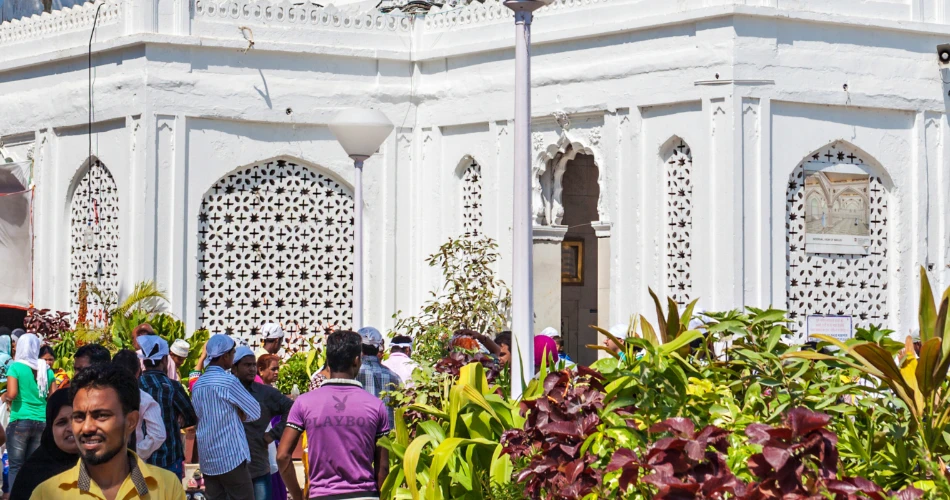
El Haji Ali Dargah es una maravilla de la arquitectura indo-islámica. Construido completamente de mármol blanco prístino, la estructura brilla brillantemente bajo el sol. La cúpula central, acompañada de minaretes, refleja la artesanía al estilo mogol, mientras que los intrincados pilares de mármol tallados y el trabajo de incrustación de vidrio añaden un toque de grandeza.
Dentro del salón principal, la tumba de Haji Ali está cubierta con una tela ornamentada, a menudo bordada con versos del Corán. Las lámparas de araña, los diseños de vidrio colorido y las celosías de mármol crean una atmósfera de serenidad y reverencia. A pesar de enfrentar los duros vientos salinos del mar Arábigo, el santuario ha resistido siglos, un testimonio de su sólida construcción e importancia cultural.
Para los amantes de la arquitectura, la mezcla de simplicidad y grandeza en Haji Ali ofrece innumerables detalles para admirar. No es solo un santuario, sino también una obra de arte viviente que narra el patrimonio islámico de Mumbai.
La Significancia Espiritual y Cultural
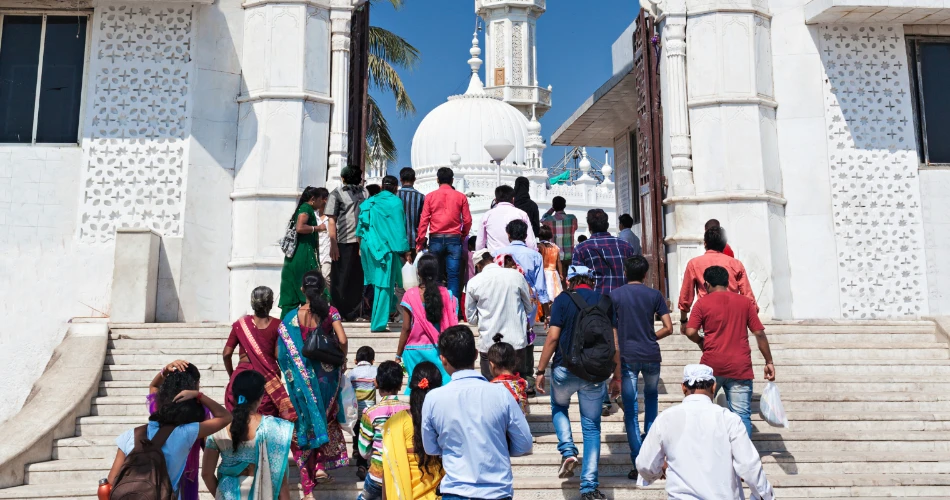
Lo que hace que Haji Ali Dargah se destaque es su inclusividad. A diferencia de muchos lugares religiosos restringidos a creencias específicas, el santuario da la bienvenida a personas de todos los ámbitos de la vida, sin importar su religión o antecedentes. Los peregrinos vienen aquí en busca de bendiciones, curas y paz, mientras que otros llegan simplemente para absorber la energía tranquila del lugar.
Cada viernes, la Dargah resuena con las melodías conmovedoras de la música qawwali. Estas canciones devocionales no solo elevan la atmósfera, sino que también conectan a los visitantes con tradiciones sufíes centenarias. Para los locales, visitar Haji Ali es tanto un viaje espiritual como una celebración cultural.
El sitio también simboliza la naturaleza cosmopolita de Mumbai, donde modernos rascacielos y antiguas creencias coexisten lado a lado. El santuario es tanto sobre espiritualidad como sobre la identidad de la ciudad.
Leyendas y Mitos Alrededor de Haji Ali Dargah
Como muchos santuarios históricos, Haji Ali Dargah está rodeado de leyendas que profundizan su encanto. Una historia popular habla de Haji Ali golpeando milagrosamente el suelo con su bastón para hacer brotar agua para una mujer pobre. Sin embargo, luego lamentó este acto, temiendo que pudiera dañar a otros, y así partió en su último viaje, que llevó a que su cuerpo fuera encontrado en el sitio actual del santuario.
Otro mito sugiere que el santuario, a pesar de estar rodeado por el mar, nunca ha estado completamente sumergido por las mareas. Los devotos creen que esto es una señal divina de las bendiciones del santo. Estas historias, transmitidas a lo largo de generaciones, no son solo folclore, sino poderosos recordatorios de fe y milagros que continúan atrayendo a miles al santuario.
Experiencia de Visita: Qué Esperar
Visitar Haji Ali Dargah es un viaje en sí mismo. Para llegar al santuario, caminas por un camino de 500 metros que se sumerge durante la marea alta, haciendo que la visita dependa del ritmo del mar. El camino, lleno de devotos y vendedores que venden flores y ofrendas, prepara el escenario para la experiencia espiritual.
Dentro, encontrarás una mezcla de fieles rezando, familias encendiendo velas y viajeros admirando la arquitectura. Los viernes están particularmente llenos, con qawwalis devocionales realizados en vivo. El mejor momento para visitar es durante la marea baja en las primeras horas de la mañana o por la tarde, cuando el santuario brilla hermosamente contra el sol poniente.
Recuerda vestirte modestamente y respetar las costumbres dentro del santuario. Aunque la entrada es gratuita, se aprecian las donaciones. Para los turistas, no se trata solo de fe, sino también de experimentar el alma de Mumbai en su forma más pura.
Haji Ali en la identidad moderna de Mumbai
A lo largo de los años, Haji Ali Dargah se ha convertido en más que un hito religioso: es un símbolo de Mumbai mismo. Desde películas de Bollywood hasta documentales de viaje, el santuario a menudo aparece como una representación visual del patrimonio de la ciudad. Se erige en un marcado contraste pero en perfecta armonía con el moderno horizonte de rascacielos, centros comerciales y calles bulliciosas de Mumbai.
Para los locales, Haji Ali sigue siendo un recordatorio de las raíces de la ciudad. Para los viajeros, es un destacado cultural inolvidable. Y para los devotos, continúa siendo una fuente de bendiciones y paz. En esencia, Haji Ali es intemporal: une el pasado y el presente mientras flota serenamente en el corazón de Mumbai.
Conclusión: Un Santuario de Fe, Armonía y Belleza
El Haji Ali Dargah es más que un monumento: es una encarnación de la esencia de Mumbai: diversa, acogedora y profundamente espiritual. Ya sea que visites por oración, arquitectura o exploración cultural, el santuario promete una experiencia como ninguna otra. Flotando en el mar Arábigo, continúa inspirando fe y asombro a millones en todo el mundo.
Si planeas un viaje a Mumbai, una visita a Haji Ali debería estar en la parte superior de tu lista. No solo serás testigo de una obra maestra arquitectónica, sino que también sentirás el poderoso sentido de unidad y devoción que hace que este santuario sea verdaderamente atemporal.